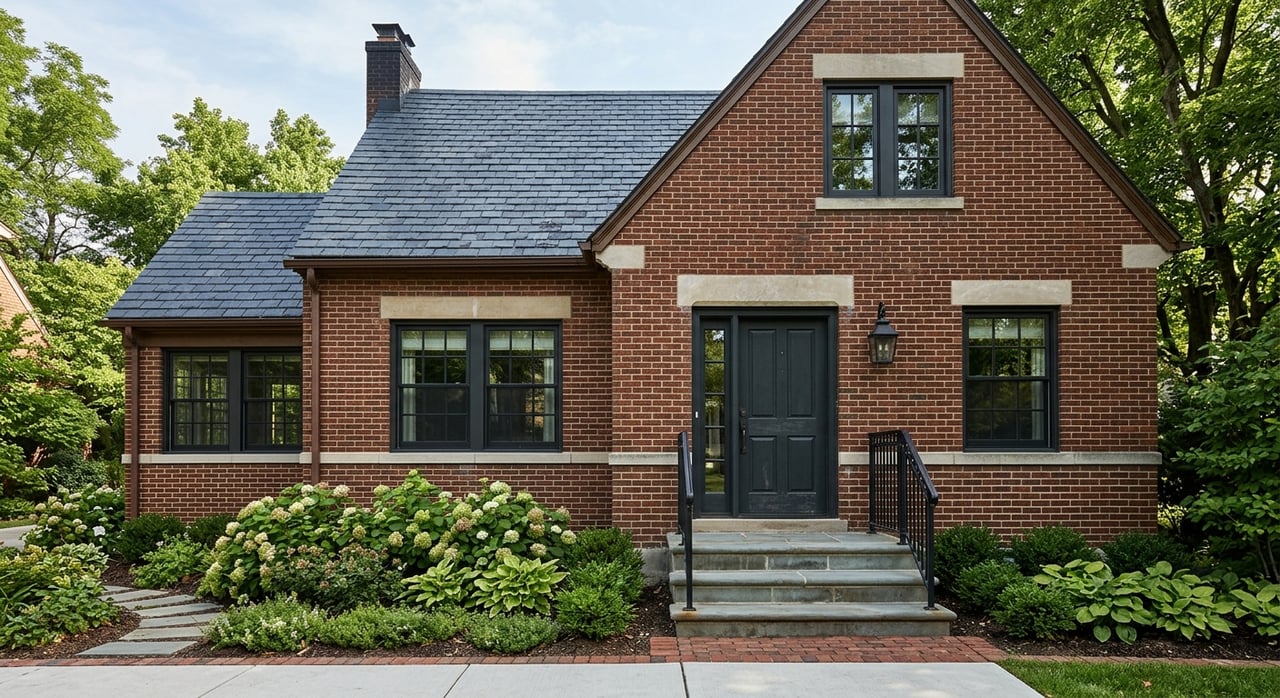
Historic Versus Newer Homes In Lemont
July 16, 2026
July 16, 2026
Trying to choose between a historic home near downtown Lemont and a newer home in one of the village’s later-growth neighborhoods? It is a smart question, because in Lemont, that choice can shape how you live day to day, how much maintenance you take on, and what kind of home experience feels right for you. If you are weighing charm against convenience, this guide will help you compare the real differences so you can move forward with more confidence. Let’s dive in.
Lemont has deep roots. The village was settled in 1836, incorporated in 1873, and its downtown was added to the National Register of Historic Places in 2016. It also has a local historic district, created in 2001, that includes the downtown commercial area and nearby residential blocks.
At the same time, most of Lemont’s housing is not historic. Local data shows 48.1% of homes were built from 1990 to 2009, 14.9% were built in 2010 or later, and 19.9% were built from 1970 to 1989. Only 7.8% of homes were built before 1940, which means a historic home in Lemont is the exception rather than the norm.
That matters when you start your search. In Lemont, choosing historic versus newer is usually less about two separate housing markets and more about lifestyle, upkeep, and setting.
Historic homes near the village core often date to the late 1800s or early 1900s. You may see Queen Anne, Italianate, Tudor Revival, Prairie School, Craftsman, Bungalow, and limestone masonry homes in and around the historic district.
These homes are not all grand or formal. Some are high-style properties, while others are modest homes with simpler designs. For many buyers, the appeal comes from authenticity, original details, and a location tied closely to downtown Lemont.
The area itself has a different feel from later subdivisions. The historic core is compact and pedestrian-oriented, with sidewalks, street trees, curbs, gutters, and on-street parking. Some homes also sit on sloped lots with retaining walls and steps, which can affect accessibility and ongoing exterior care.
Older homes usually need more regular attention than newer ones. In many cases, the goal is to maintain and repair existing materials rather than replace them outright, especially when original features still contribute to the home’s character.
That can affect how you budget for ownership. Buyers should pay close attention to masonry, porches, trim, and system updates, even when a home appears well maintained. The work is often manageable, but it tends to require more planning and a longer-term mindset.
If a home is inside Lemont’s historic district, exterior changes may require a Certificate of Appropriateness. That means updates to visible exterior elements may go through local review before work begins.
For some buyers, that is a fair trade for living in a character-rich part of town. For others, it may feel restrictive. It is important to understand that buying a historic home in Lemont can also mean buying into a preservation process.
Lemont’s newer housing stock grew with later expansion, especially from the late 1980s forward. The village added significant residential development during that period, and the median year built in the latest local snapshot is 1995.
In these newer areas, you are more likely to find ranches, raised ranches, split levels, minimal traditional homes, and neo-traditional designs. These homes are more closely tied to Lemont’s later-growth neighborhoods than to the older blocks near downtown.
For many buyers, newer homes offer a more predictable ownership experience. You are often starting with more current building performance, fewer preservation-related limitations, and a home that may need fewer immediate updates.
Newer construction generally offers advantages in energy performance, comfort, durability, and day-to-day ease. That does not mean every newer home is move-in perfect, but it often means fewer surprises compared with an older property that has been updated in stages over time.
If you want lower maintenance demands from the start, newer homes may be the better fit. You may also find it easier to plan future improvements when you are not trying to preserve older materials or work within district guidelines.
One of the biggest lifestyle differences between historic and newer homes in Lemont is how you move through daily life. The downtown area offers the strongest walkability benefits, and local planning efforts have specifically supported walkable, mixed-use development near the Metra station.
The village’s Active Transportation Plan also aims to make walking, biking, and transit safer and more convenient. Downtown parking includes street parking, public lots, and a garage with more than 260 spaces, though local survey results still show parking convenience remains an important issue.
That said, Lemont still functions mostly as a driving suburb. Local data shows 71.6% of workers drive alone to work, while 3.9% walk or bike. So if walkability is high on your list, the historic core stands out, but most of Lemont still depends on the car.
Both historic and newer homes can be appealing, but they often attract different buyers. Historic homes usually stand out because of their character, scarcity, and location near the village core.
That uniqueness can help create strong interest, especially among buyers who value original architecture and a more established street pattern. At the same time, resale may be more sensitive to deferred maintenance, energy-efficiency updates, and a buyer’s comfort with district review rules.
Newer homes often have broader appeal. Buyers who want turn-key condition, more current efficiency, and fewer property-specific restrictions may feel more comfortable making an offer on a newer home.
The tradeoff is that newer homes can feel more standardized. They may not have the same one-of-a-kind presence as a historic property, even if they check more practical boxes.
If you are deciding between the two, it helps to think beyond style alone. Ask yourself how you want your home to function, how much maintenance you are willing to take on, and what kind of setting feels best for your routine.
Here is a simple way to frame the choice:
The best home for you is the one that matches your priorities, not just your wish list. If you love character, walkability, and the feel of an older neighborhood, a historic home near downtown Lemont may be worth the extra care.
If you want convenience, fewer maintenance questions, and a more straightforward ownership experience, a newer home may offer better long-term comfort. Neither option is automatically better. It depends on what matters most in your day-to-day life and how you want your home to support it.
When you are comparing homes in Lemont, it helps to look past surface finishes and focus on the bigger picture: location, upkeep, future flexibility, and resale appeal. If you want help sorting through those tradeoffs and narrowing down the right fit, Michelle Madden can guide you through the Lemont market with local insight and a practical plan.
Get assistance in determining the current property value, crafting a competitive offer, writing and negotiating a contract, and much more. Contact Michelle today.